Can't personalize beyond basic email and SMS
Price and promotion, personalized without a developer
Maestra Platform handles both as configuration, the all-in-one retention marketing platform for ecommerce brands, run for you by a forward-deployed marketer.
Brands running on Maestra






The problem
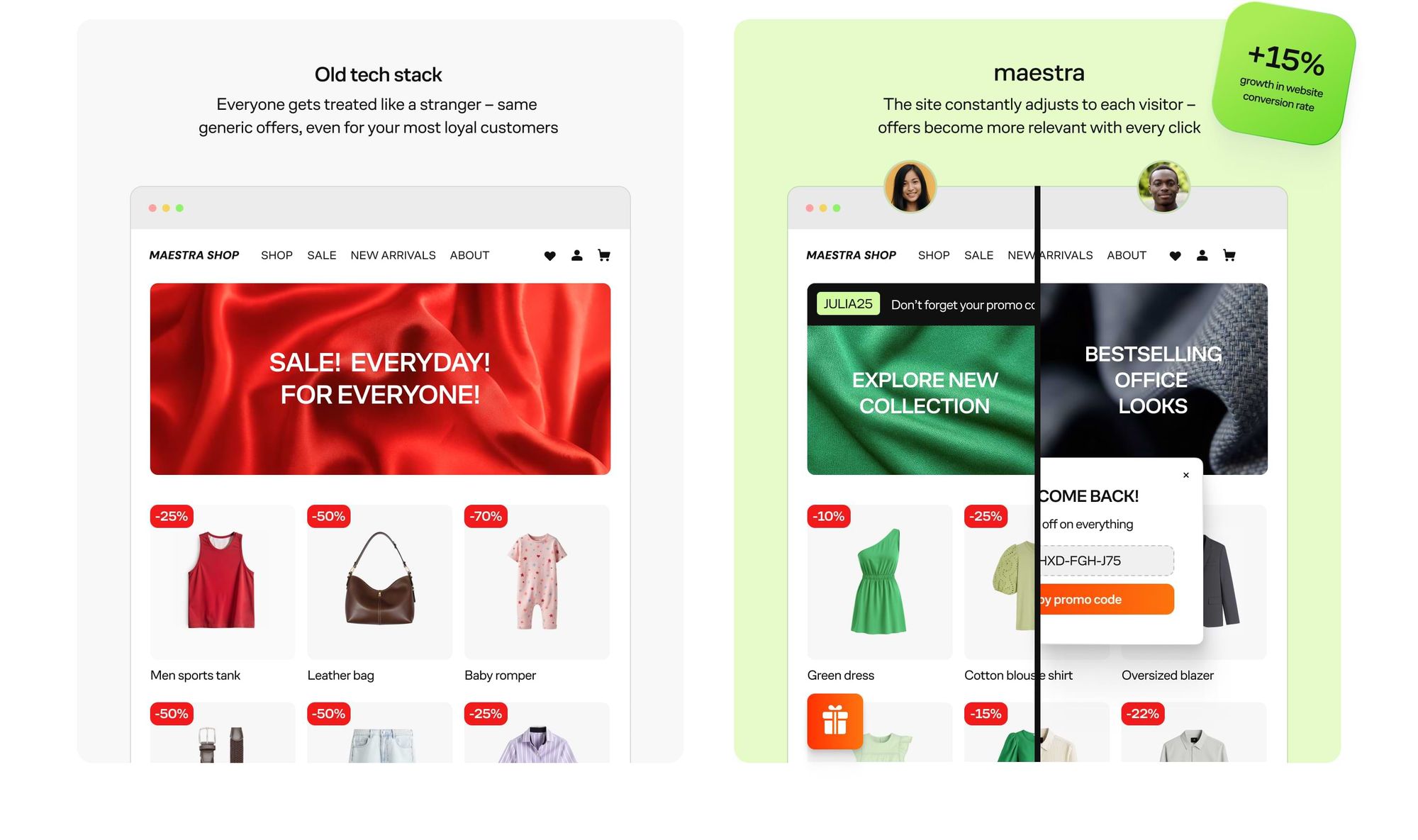
Same homepage, no matter who is looking
Most ecommerce sites still run one static experience for every shopper, regardless of what they have browsed, bought, or asked for. The homepage, the banners, and the product grid look the same whether it is a first-time visitor or someone on their twentieth order. That flattens the exact signals a brand has already collected.
What we hear from brands
the site experience is static and manually merchandised, offering the same journey to all visitors, according to a French skincare brand
the website is bulky and generic, lacking dynamic personalization, according to a premium appliance brand
the website experience is static, with the same banners for all visitors, according to an independent fragrance boutique
The new way
Turn the same catalog into a different asset for every channel
Maestra converts a product feed into on-brand dynamic visuals, with tags, ratings, and current pricing, that render in real time for ads, email, and the website alike. When a price changes, the image updates everywhere it appears, without a design request.
+56.6%
growth in online revenue year over year after switching from Klaviyo
From a published case study+111.7%
growth in online order volume year over year after switching from Klaviyo
From a published case study49.3%
of active contributors read personalized impact reports, twice the rate of regular emails
From a published case studyCustomer proof
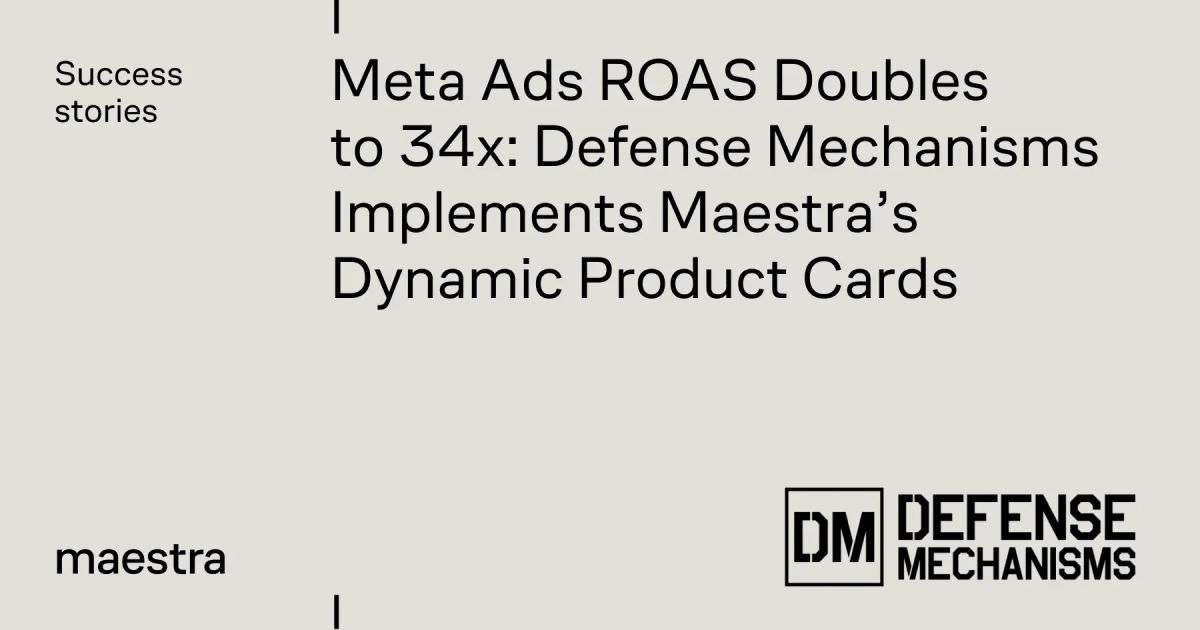
Two dollars of return became four, from the same catalog

The ads were pulling from a feed that went stale between updates, so the creative advertised what was no longer relevant. Dynamic product cards fixed the feed and the return on Meta spend doubled.
17x → 34x
Meta ads ROAS
How it works
Nothing goes dark while you move
Audit first
Your forward-deployed marketer maps what you run today and what it will look like once it is one platform.
Build in parallel
The new flows and segments are assembled next to the live ones, so there is no window where campaigns stop.
Cut over deliberately
You go live channel by channel on a date you picked, with the old stack still standing behind you until you do not need it.
The platform
Enterprise capability, ecommerce timeline
The heavy parts of an enterprise CDP are already built and already connected to the channels, so the work left is configuration rather than a platform project. Brands get capability that used to take a year of integration.
Your forward-deployed marketer
Deliverability is somebody's job here
Domains, sender signatures, and Postmaster are configured at migration and watched afterwards, with inbox placement treated as a metric rather than a complaint to answer.
Domains, signatures, and Postmaster configured for you
Email health monitored, not just reported
Warm-up handled during migration
Replace your stack
Brands usually replace three to five tools
Email and SMS, lead capture, recommendations, loyalty, and whatever glue holds them together. Each of them works better once it reads the same profile as the rest.
Bring your stack to the conversation
The useful version of this discussion starts from the tools you run now and what each of them would be replaced by.